
HOW MUCH FOOD SHOULD YOU STORE?
Example: two adults for 90 days
Requirement
Estimate
People
2
Days
90
Daily calories
4,000
Base food energy
360,000 kcal
With 10% reserve
396,000 kcal
Do not try to meet this requirement with rice alone. A proper food supply needs variety, fats, protein, fibre and micronutrients.
Before buying anything, work out how many people you need to feed and how long you want your emergency supply to last.
A common planning estimate for an adult is approximately 2,000 calories per day. Actual needs vary depending on age, body size, activity, pregnancy and health.
Emergency food supply calculator
Use this calculator to estimate the energy requirement for your household.
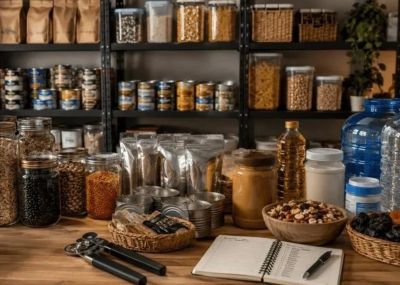
WHAT FOOD SHOULD YOU BUY
Category A – Staple carbohydrates
The best emergency food is food your household already eats, that can be stored safely and prepared using the cooking equipment you have available.
These are the foundation of many emergency food supplies.
Food
Why buy it
White rice
Versatile energy source
Pasta
Easy meals
Rolled oats
Breakfast and baking
Couscous
Quick preparation
Flour
Bread and cooking
Instant noodles
Convenient meals
Dried potato flakes
Quick side dishes
Crackers
Ready-to-eat option
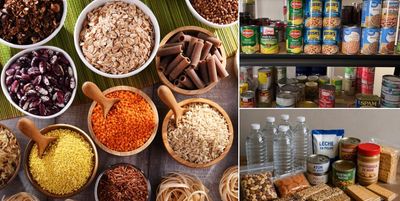
Protein
Category B – Protein
My recommendation: Prioritise white rice, oats and pasta before buying large amounts of speciality survival meals.
Food
Storage format
Lentils
Dry or canned
Chickpeas
Dry or canned
Kidney beans
Dry or canned
Black beans
Dry or canned
Split peas
Dry
Tuna
Canned
Sardines
Canned
Canned chicken
Canned
Peanut butter
Commercial sealed jars
Powdered milk
Sealed packaging
Soy products
Shelf-stable or dried
Protein is important for maintaining muscle and supporting normal body functions. Build variety into your supply.
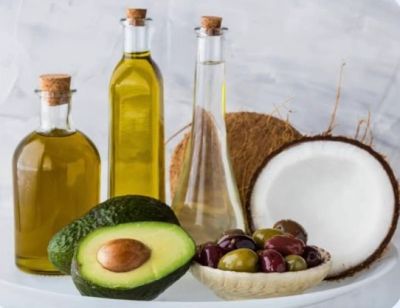
Fats & oils
Category C – Fats and oils
These are important because fats provide concentrated energy.
Olive oil
Vegetable oil
Coconut oil
Peanut butter
Nuts
Seeds
Oils can become rancid, so buy sensible quantities and rotate them. Don't assume cooking oils have the same storage life as dried grains.
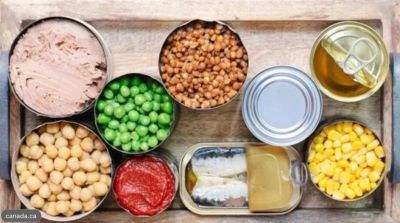
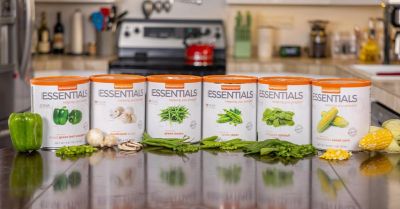
Canned Fruit and Vegetables
Category D – Fruit and vegetables
What to buy>
Canned tomatoes
Canned corn
Canned peas
Canned carrots
Canned green beans
Canned fruit
Dried vegetables
Raisins
Dried apricots
Freeze-dried vegetables
Freeze-dried fruit
Essential extras
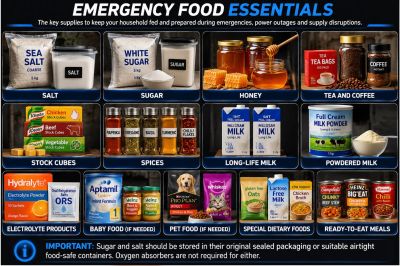
Category E – Essential extras
Salt
Sugar
Honey
Tea and coffee
Stock cubes
Spices
Long-life milk
Powdered milk
Electrolyte products
Baby food if needed
Pet food if needed
Special dietary foods
Ready-to-eat meals
Important: Sugar and salt should be stored in their original sealed packaging or suitable airtight food-safe containers. Oxygen absorbers are not required for either.
Connect with Crypto 2 Pro
Warning By using this service you have Automatically agreed to all the T&C'S.
IMPORTANT NOTICE
By using this service, you acknowledge and agree to the Crypto2Pro Terms & Conditions. By continuing to access or use this service, you confirm that you have read, understood and agreed to those Terms & Conditions.
You also acknowledge that the information and content provided through Crypto2Pro is not financial advice and that we do not hold a financial services licence.
Any content, information or material provided through any Crypto2Pro platform, including this website and other communication